What Exactly is MindVideo AI?
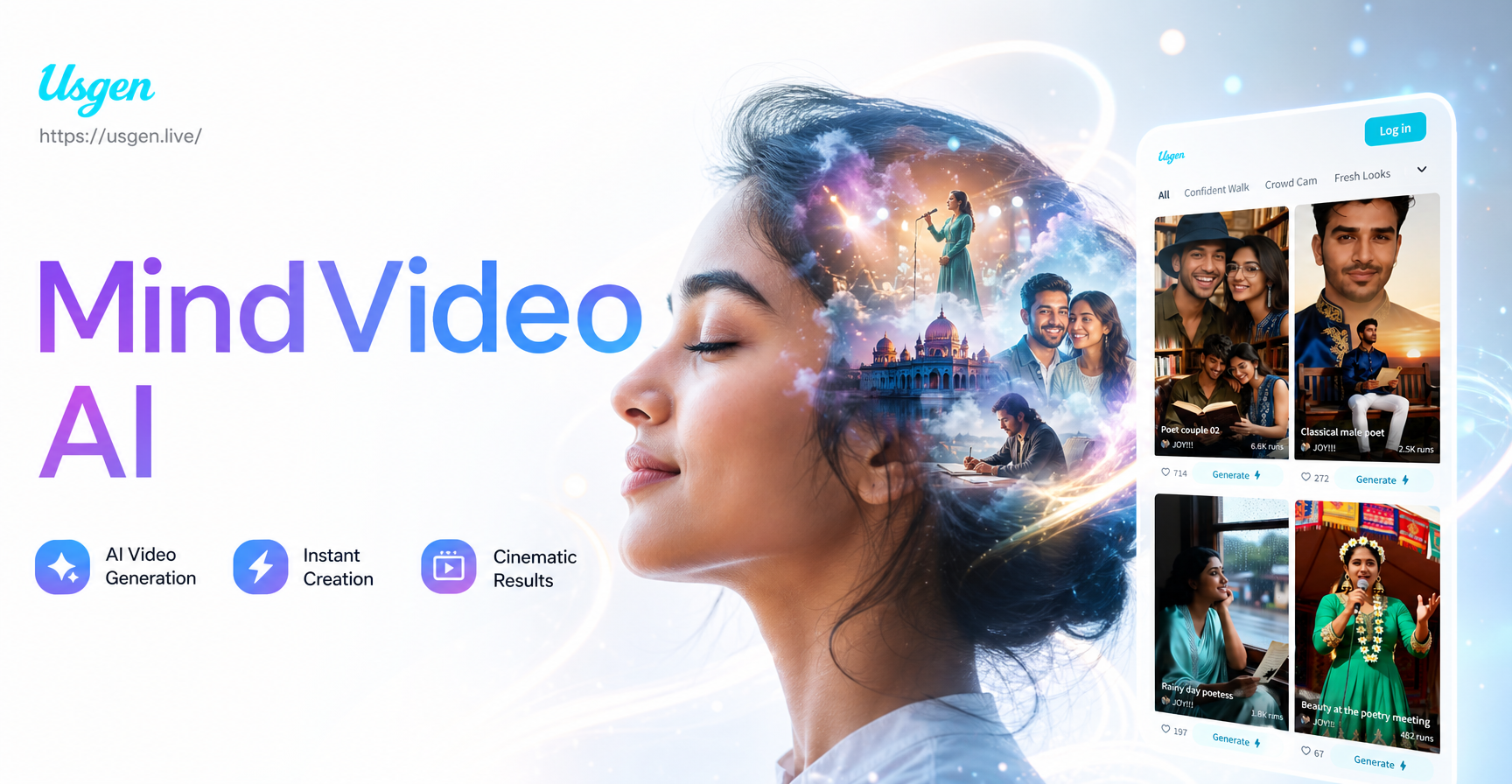
MindVideo AI is a sophisticated video synthesis model. Unlike traditional video editing tools, it doesn't just modify existing footage. Instead, it generates entirely new video sequences from scratch based on your input. You provide a simple text prompt, such as "a cat wearing a hat dancing in a cyberpunk city," and the AI interprets this description to create a short, coherent, and visually compelling video clip. Some versions also allow you to upload a reference image for style or character consistency.
Core Technology Behind MindVideo AI
The power of MindVideo AI comes from a combination of deep learning architectures, primarily diffusion models. These models are trained on massive datasets of video content, learning the intricate patterns of motion, physics, lighting, and object interaction. When you give it a prompt, the AI doesn't just draw a picture, it predicts a sequence of frames that logically follow one another, creating the illusion of realistic motion and time. This involves understanding spatial relationships, temporal coherence, and the semantics of language to translate words into moving images.
Key Features and Capabilities of MindVideo AI
The appeal of MindVideo AI lies in its versatile feature set, designed to make professional-grade video creation accessible to everyone.
1. Text-to-Video Generation
This is the fundamental capability. You describe any scene, character, or action you can imagine, and MindVideo AI brings it to life. The quality of the output depends on the specificity of your prompt. Detailed prompts yield more accurate and impressive results. For instance, "a serene sunset over mountains" is good, but "cinematic wide shot of a majestic, snow-capped mountain range at golden hour, with slow-moving clouds and a reflective lake in the foreground" will guide the AI toward a more specific and high-quality result.
2. Image-to-Video Animation
Some platforms, like usgen, build upon this concept by allowing you to animate static images. You upload a photo of a person, pet, or object, and the AI can apply predefined or custom motions to it. This is how effects like making a person in a photo blink, smile, or turn their head are created, bridging the gap between still images and dynamic video.
3. High-Quality Output and Style Control
Advanced MindVideo AI models can generate videos in high definition with various artistic styles. You are not limited to photorealism. You can specify styles like "anime," "watercolor painting," "3D cartoon," "cyberpunk," or "cinematic" to match the aesthetic of your project. This style control empowers creators to maintain brand consistency or explore unique visual narratives.
4. Complex Scene Understanding
The best models demonstrate a surprising understanding of complex prompts. They can handle multiple subjects, basic physics (like object falling or water flowing), emotional expressions on characters, and dynamic camera movements (e.g., "slow zoom in," "panning shot"). This moves beyond simple animation into the realm of directed storytelling.
Why is MindVideo AI a Game-Changer?
The impact of this technology stretches across numerous industries and creative pursuits.
For Content Creators and Marketers
MindVideo AI dramatically lowers the barrier to video production. Creating social media clips, YouTube intros, product explainers, or advertising concepts no longer requires expensive equipment, actors, or locations. A single creator can brainstorm an idea in the morning and have a draft video by the afternoon, enabling rapid prototyping and content iteration. This agility is invaluable in the fast-paced digital landscape.
For Storytellers and Filmmakers
Independent filmmakers and writers can use MindVideo AI to visualize scenes from a script, create dynamic storyboards, or even produce short films. It serves as a powerful pre-visualization tool and can help pitch ideas more effectively by showing a moving concept rather than just describing it.
For Education and Training
Educators can generate custom videos to illustrate complex concepts—showing the inner workings of a cell, the formation of a galaxy, or historical events—in an engaging, visual format. This caters to different learning styles and makes abstract ideas more concrete.
Current Limitations and Ethical Considerations
As with any powerful new technology, it's important to understand its current boundaries and use it responsibly.
Technical Limitations
Most publicly available MindVideo AI models still generate relatively short clips (a few seconds to a minute). Achieving feature-length, perfectly coherent narratives is not yet possible. Videos can sometimes contain visual artifacts, illogical physics, or morphing objects. The technology is improving rapidly, but it's not a perfect replacement for all traditional video production yet.
Ethical Use and Deepfakes
The ability to generate realistic videos of people raises significant ethical questions, particularly regarding deepfakes and misinformation. Responsible use involves clear labeling of AI-generated content, obtaining consent when using a person's likeness, and never using the technology for deception, harassment, or fraud. The industry is developing watermarking and detection tools to help address these challenges.
Copyright and Originality
The legal landscape around AI-generated content is still evolving. Questions remain about the ownership of the output and the use of copyrighted material in training data. Creators should be mindful of platform terms of service and strive to use AI as a tool for original creation rather than direct replication of protected works.
The Future of MindVideo AI
The trajectory of this technology points toward longer, higher-fidelity video generation, more intuitive controls (like directorial language), and better integration with other creative tools. We can expect a future where AI handles initial scene generation and rough cuts, allowing human creators to focus on direction, fine-tuning, and injecting emotional depth—a powerful collaboration between human creativity and machine execution.
Getting Started with MindVideo AI Technology
While dedicated "MindVideo AI" platforms may be in development, you can experience this transformative technology today through apps like usgen. usgen provides an accessible, mobile-first gateway to AI video generation. You can experiment with text-to-video, animate your own photos with viral effects, and explore a massive library of style filters—all steps toward understanding the incredible potential of AI-driven video creation. The future of visual storytelling is here, and it starts with your imagination.