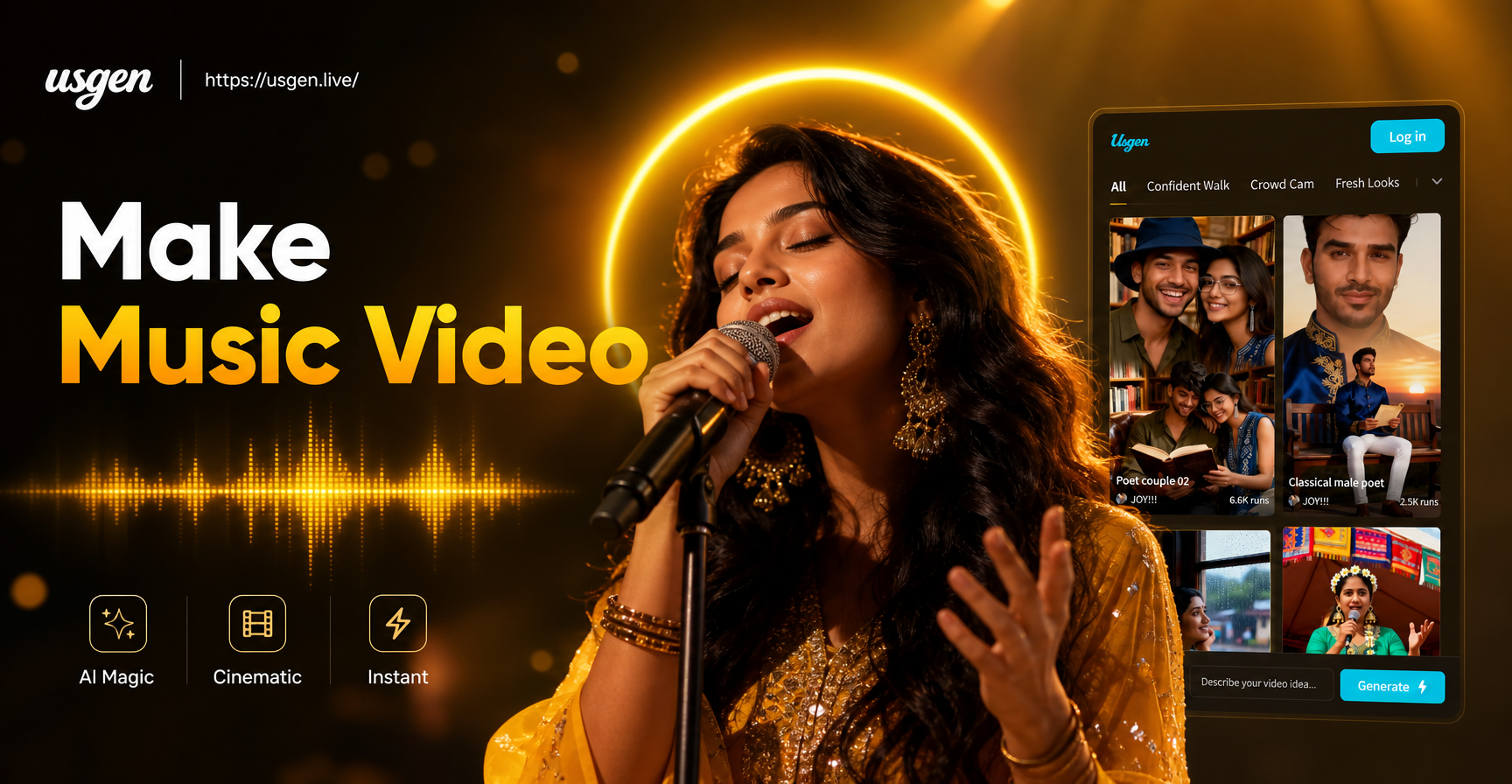
From Concept to Release: A Step-by-Step Guide to Making Your Music Video
Creating a compelling music video is one of the most powerful ways to connect with your audience and bring your song to life. While high-budget productions have their place, the digital age has democratized video creation. With a smartphone, some creativity, and the help of artificial intelligence, you can produce a professional-looking music video entirely for free.
This comprehensive guide walks you through the entire process, from the initial concept to the final upload. We'll cover traditional filmmaking techniques alongside innovative AI tools that can enhance your visuals, generate effects, and streamline your workflow, ensuring your artistic vision is realized without financial strain.
1. Develop Your Concept and Storyboard
Every great video starts with a strong idea. Begin by listening to your song repeatedly. What emotions, colors, and images does it evoke? Is it a narrative story, a performance piece, or an abstract visual experience? Define the core message you want your video to communicate.
Once you have a concept, create a storyboard. This doesn't need to be a professional drawing. Simple sketches or a shot list describing each scene, camera angle, and action will serve as your roadmap. Tools like free online storyboard creators or even a notes app on your phone are perfect for this stage. A clear plan saves immense time during filming and editing.
2. Plan Your Shoot: Gear and Location
You don't need expensive equipment. A modern smartphone can capture excellent 4K video. Ensure you have enough storage space and consider investing in a cheap smartphone tripod for stable shots. Natural light is your best friend; shoot during the "golden hour" (just after sunrise or before sunset) for a cinematic glow. Scout locations that fit your concept, whether it's an urban landscape, a quiet park, or an interesting room in your home. Always check if you need permits to film in public spaces.
For audio, while you'll use your mastered track in the edit, recording clean reference audio on set helps immensely with syncing performance shots later. Use clapperboards (a free app will do) or simply clap your hands visibly at the start of a take to create a sync point.
3. Filming Techniques for Dynamic Footage
Variety is key to keeping viewers engaged. Don't just set up a static camera and perform. Mix up your shots:
- Wide Shots: Establish the scene and location.
- Medium Shots: Capture your performance from the waist up.
- Close-Ups: Show emotion, details of an instrument, or lips syncing.
- Cutaways: Film related objects, landscapes, or abstract textures (e.g., flowing water, traffic lights) to use as transitional B-roll.
Shoot multiple takes of each shot type. It's better to have too much footage than not enough. Move the camera slowly—handheld pans, tilts, or gentle tracking shots can add professional movement. Most importantly, capture the energy and emotion of your song in your performance.
4. Editing Your Music Video for Free
This is where your storyboard comes back into play. Import all your footage and your audio track into a free video editor. Excellent options include DaVinci Resolve (professional-grade and free), CapCut (great for mobile and desktop), or iMovie for Mac users.
Sync Your Footage: Line up your performance clips with the audio track using the clap or audio waveform as a guide. Build the Rough Cut: Follow your storyboard to place your clips in sequence on the timeline, focusing on the overall flow rather than perfection. Refine the Edit: Tighten your cuts to match the rhythm, beats, and emotional peaks of the music. A cut on a drum hit or a lyric change feels natural. Use your B-roll cutaways to add visual interest or cover transitions. Color Correction & Grading: Use your editor's tools to balance the exposure and colors across all clips (correction), then apply a consistent look or "filter" (grading) to establish the video's mood.
5. Enhancing Your Video with AI Tools
This is where AI can transform your project from good to extraordinary, and it's accessible right from your phone.
AI Video Generation: Stuck for a specific visual? Use an AI video generator to create stunning B-roll, abstract backgrounds, or even alternate performance scenes based on a text prompt (e.g., "neon light trails in a dark tunnel," "surreal floating islands at dusk"). These AI-generated clips can be seamlessly edited into your main footage.
Style Transfer & Visual Effects: Apply unique artistic styles to your entire video or specific clips. Transform live-action footage into an animated, cyberpunk, watercolor, or cinematic masterpiece with a single tap using AI style filters. This is perfect for creating a memorable chorus sequence or a dream-like flashback.
AI Upscaling & Enhancement: If some footage was shot in lower quality, AI can intelligently upscale it to higher resolution, reduce noise, and sharpen details, ensuring a consistent, high-definition final product.
Automated Editing Assistance: Some AI tools can analyze your song's beats and automatically suggest cut points, helping you create a rhythmically perfect edit faster.
6. Finalizing and Releasing Your Masterpiece
Before you export, watch your video multiple times. Check for sync issues, jump cuts, or color inconsistencies. Get feedback from a few trusted friends. Export your final video in the highest quality recommended by your target platform (e.g., 1080p or 4K, H.264 codec).
When uploading to YouTube, Vimeo, or social media, craft a compelling title, description with credits (director, editor, location), and relevant tags (e.g., [Your Genre] Music Video, Indie Artist, DIY Film). Create an engaging thumbnail. Share it across all your channels and engage with your audience in the comments. Your music video is not just a piece of art; it's a powerful tool for growing your fanbase.
Conclusion: Your Vision, Amplified
Making a music video is an ambitious and rewarding creative project. By combining solid planning, passionate performance, and the revolutionary power of AI-assisted editing and effects, you can produce visuals that truly do your music justice. The barriers to entry have never been lower. Your most important tools are your creativity and your song. Start planning, start filming, and use the technology at your fingertips to share your unique vision with the world.